Meta Description: Learn how a smart Content Refresh Strategy can improve rankings, increase organic traffic, and keep your website relevant with proven SEO techniques.
SEO-Friendly URL Slug:content-refresh-strategy-guide
Content Refresh Strategy: The Complete Guide to Boost SEO and Organic Traffic
Keeping your website updated is just as important as creating new content. A well-planned Content Refresh Strategy helps improve search engine rankings, increases organic traffic, and keeps your audience engaged. Instead of publishing new articles every week, updating existing content can often deliver faster and better SEO results. Whether you manage a blog, business website, or eCommerce store, a strong Content Refresh Strategy ensures your content stays valuable and competitive.
What Is a Content Refresh Strategy?
A Content Refresh Strategy is the process of updating existing website content to improve its accuracy, relevance, readability, and search engine performance. Rather than creating everything from scratch, you improve pages that already have authority and traffic potential.
Refreshing content may include:
- Updating outdated statistics
- Adding new information
- Improving headings and formatting
- Optimizing keywords
- Fixing broken links
- Enhancing images and visuals
- Improving internal linking
A successful Content Refresh Strategy helps search engines recognize that your content remains useful and up to date.
Why Content Updates Matter for SEO
Regular Content Updates show both users and search engines that your website is active. Google prefers content that provides accurate and current information.
Benefits of regular Content Updates include:
- Higher search rankings
- Better user experience
- Increased organic traffic
- Lower bounce rate
- More backlinks and shares
- Improved content credibility
When combined with a smart Content Refresh Strategy, these updates can significantly improve your website’s performance.
How to Build an Effective Content Refresh Strategy
Creating a successful Content Refresh Strategy requires planning rather than randomly editing old posts.
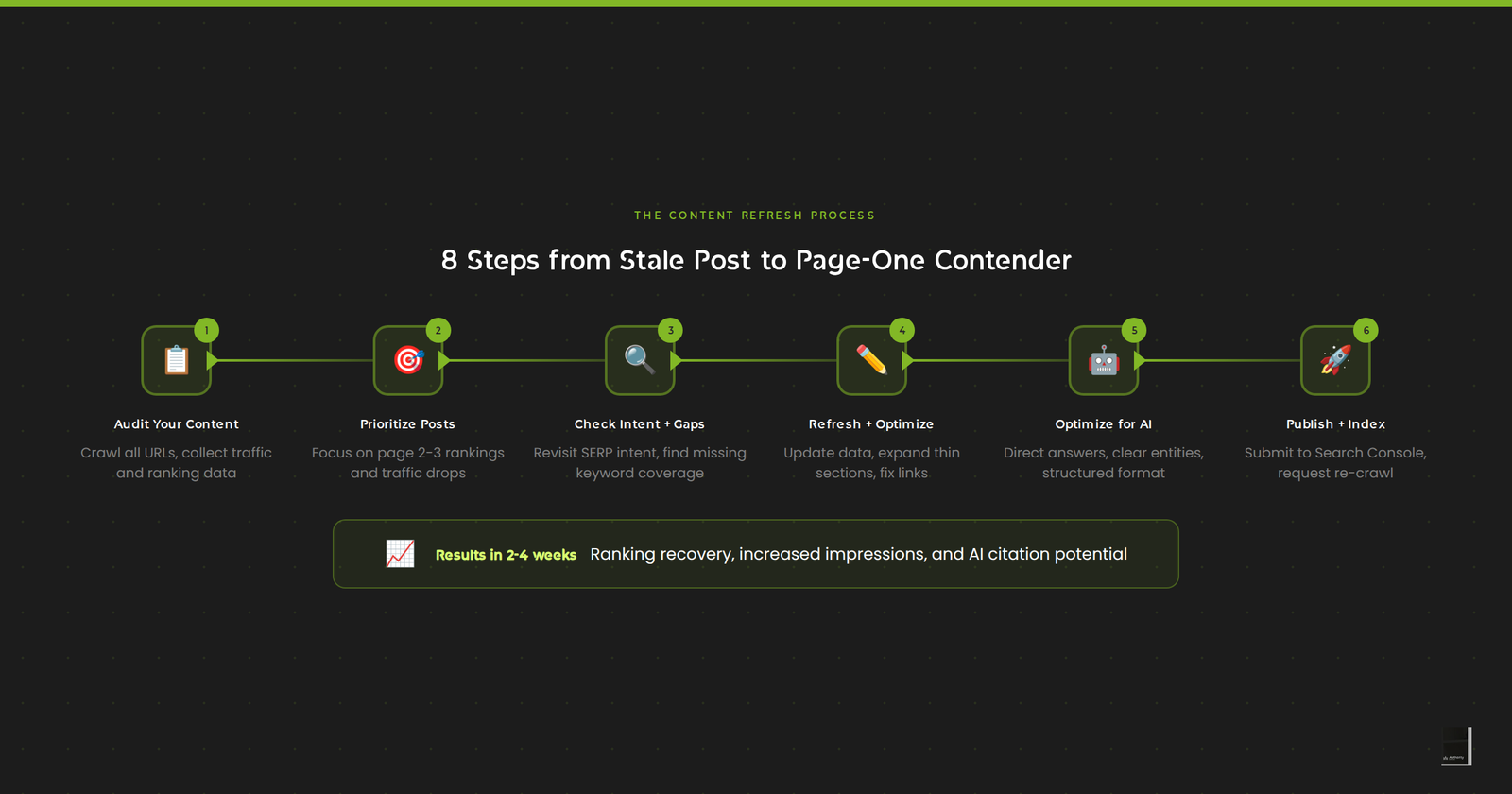
1. Audit Existing Content
Start by reviewing your website using Google Analytics and Google Search Console. Identify pages with:
- Declining traffic
- Lower rankings
- High impressions but low clicks
- Outdated information
This is the foundation of a successful Content Audit Process.
2. Improve Keyword Optimization
Review your target keywords and naturally include related search terms. Focus on improving keyword placement without stuffing.
Effective Keyword Optimization includes:
- Updating title tags
- Improving meta descriptions
- Adding keywords in headings
- Optimizing image alt text
- Using keywords naturally throughout the article
Better Keyword Optimization makes your refreshed content easier for search engines to understand.
3. Update Information
Replace outdated facts, statistics, screenshots, and examples with current information. Readers trust websites that provide accurate content.
Regular Content Updates help maintain credibility while improving SEO performance.
4. Improve Readability
Break long paragraphs into smaller ones.
Use:
- Bullet points
- Numbered lists
- Short sentences
- Clear headings
- Helpful examples
This keeps visitors engaged and encourages them to stay longer on your page.
5. Strengthen Internal Links
Add links to your latest articles and important pages. Internal linking helps search engines crawl your website while guiding visitors toward related content.
Best Practices for a Successful Content Refresh Strategy
Following proven SEO practices makes every Content Refresh Strategy more effective.
Focus on Search Intent
Understand what users actually want when searching. Update your article to answer their questions more completely than competing pages.
Improve Visual Content
Add:
- Infographics
- Updated screenshots
- Charts
- Images
- Videos
Visual improvements increase engagement and improve user experience.
Optimize Technical SEO
Technical improvements include:
- Faster page speed
- Mobile-friendly design
- Secure HTTPS
- Schema markup
- Better Core Web Vitals
These factors support your overall Keyword Optimization efforts and improve rankings.
Refresh High-Performing Content First
Instead of updating every page, prioritize articles that already receive impressions or moderate traffic. Small improvements often produce significant gains.
This approach makes your Content Audit Process more efficient.
Common Mistakes to Avoid
Even a good Content Refresh Strategy can fail if common mistakes are ignored.
Avoid:
- Keyword stuffing
- Removing valuable information
- Ignoring user intent
- Updating only the publication date
- Forgetting internal links
- Leaving broken external links
- Skipping image optimization
A thoughtful approach always performs better than making unnecessary edits.
How Often Should You Refresh Content?
The ideal schedule depends on your industry.
General recommendations:
- Evergreen articles: every 6–12 months
- Product pages: every 3–6 months
- Industry news: monthly
- High-traffic blogs: quarterly
Frequent Content Updates keep your website competitive and relevant.
Tools That Help with Content Refresh
Several SEO tools simplify the refresh process.
Popular options include:
- Google Search Console
- Google Analytics
- Ahrefs
- SEMrush
- Screaming Frog
- Surfer SEO
- Grammarly
These tools support your Content Audit Process, identify optimization opportunities, and improve Keyword Optimization decisions.
Conclusion
A well-planned Content Refresh Strategy is one of the smartest ways to improve SEO without constantly creating new content. By performing regular Content Updates, following a structured Content Audit Process, and applying proper Keyword Optimization, you can increase rankings, attract more visitors, and deliver greater value to your audience.
Instead of letting old articles lose visibility, refresh them regularly and keep your website useful, accurate, and competitive. Over time, a consistent Content Refresh Strategy can become one of your most effective long-term SEO investments.
Frequently Asked Questions
1. What is a Content Refresh Strategy?
A Content Refresh Strategy is the process of updating existing website content to improve its SEO performance, relevance, and user experience.
2. How often should I refresh website content?
Most evergreen content should be refreshed every 6 to 12 months, while competitive topics may require more frequent Content Updates.
3. Does refreshing content improve Google rankings?
Yes. Updating valuable content with better information, stronger Keyword Optimization, and improved structure can help increase rankings and organic traffic.
4. What is included in a Content Audit Process?
A Content Audit Process involves reviewing existing pages, analyzing performance, identifying outdated information, and deciding which content should be updated, merged, or removed.