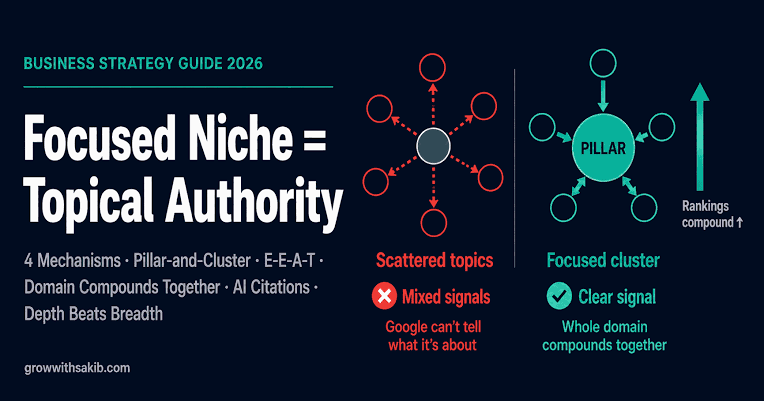
If you want your website to rank higher on search engines, creating random blog posts is no longer enough. A Topical Authority Strategy helps you organize your content around a specific subject so search engines recognize your website as a trusted source. Instead of targeting only individual keywords, this method focuses on covering an entire topic in depth. A strong Topical Authority Strategy can improve your visibility, increase organic traffic, and build long-term credibility.
What Is a Topical Authority Strategy?
A Topical Authority Strategy is an SEO approach that focuses on publishing high-quality content covering every important aspect of a particular topic. The goal is to show search engines that your website has deep knowledge of the subject.
Rather than writing one article about a keyword, you create a complete collection of related content connected through internal links. This structure helps both users and search engines understand your expertise.
Why Topical Authority Matters
Search engines aim to provide users with the most reliable information. Websites that consistently publish detailed, relevant content are more likely to earn higher rankings.
A successful Topical Authority Strategy helps you:
- Build trust with readers.
- Improve keyword rankings.
- Increase organic traffic.
- Strengthen your website’s credibility.
- Create sustainable SEO growth.
Build a Strong Content Cluster
One of the most effective ways to implement a Topical Authority Strategy is by creating a content cluster. A content cluster includes one main guide and several related articles that explore smaller topics in detail.
For example, if your main topic is SEO, your cluster may include articles about keyword research, on-page SEO, technical SEO, link building, and content optimization.
A well-planned content cluster makes it easier for search engines to understand your website structure. It also encourages visitors to explore multiple pages, improving user engagement.
Steps to Create an Effective Content Cluster
- Choose one main topic.
- Identify related subtopics.
- Write detailed articles for each subtopic.
- Connect them using internal links.
- Update content regularly.
Using a content cluster allows your website to cover every angle of a topic without repeating the same information.
Perform Comprehensive Topic Research
Before creating content, spend time on topic research. This process helps you understand what your audience wants to learn and what search engines expect.
Good topic research includes:
- Finding common search questions.
- Identifying related keywords.
- Analyzing competitor content.
- Discovering content gaps.
- Understanding user intent.
The better your topic research, the easier it becomes to produce articles that genuinely help readers and perform well in search results.
Improve Internal Linking for Better SEO
Internal links play a major role in a successful Topical Authority Strategy. They connect related pages and guide visitors through your website naturally.
Strong internal linking offers several benefits:
- Helps search engines crawl your website.
- Passes authority between pages.
- Improves user experience.
- Reduces bounce rates.
- Encourages longer session durations.
When building internal linking, always use descriptive anchor text and connect relevant articles naturally.
Best Practices for a Successful Topical Authority Strategy
Creating authority requires planning and consistency. Follow these best practices to get better results:
Publish High-Quality Content
Focus on helpful, original, and well-researched articles. Quality always performs better than quantity.
Cover Every Important Subtopic
Don’t stop after publishing one article. Build an entire knowledge base around your niche using your Topical Authority Strategy.
Keep Content Updated
SEO changes over time. Refresh older articles with new information to keep them accurate and useful.
Focus on User Intent
Understand why users search for a keyword and provide the answers they need.
Maintain Consistent Internal Links
Review your internal linking structure regularly to ensure all related pages connect effectively.
Common Mistakes to Avoid
Many websites fail because they make simple SEO mistakes.
Avoid these common errors:
- Publishing thin or duplicate content.
- Ignoring topic research.
- Creating unrelated blog posts.
- Forgetting internal links.
- Targeting too many topics at once.
- Neglecting content updates.
A consistent Topical Authority Strategy avoids these issues and builds lasting search visibility.
How Long Does It Take to Build Authority?
Building authority is not an overnight process. Depending on your niche and competition, results may take several months.
Stay patient and continue improving your content cluster, performing topic research, and strengthening internal linking. Over time, search engines will recognize your website as a valuable resource.
Conclusion
A well-planned Topical Authority Strategy is one of the smartest ways to improve SEO in today’s competitive digital landscape. Instead of chasing individual keywords, focus on creating valuable content that covers your niche completely. By combining a strong content cluster, detailed topic research, and effective internal linking, you can build trust with readers and improve search engine rankings naturally.
Remember that SEO is a long-term investment. Continue publishing useful content, update your existing pages, and refine your Topical Authority Strategy regularly. Consistency is the key to lasting success.