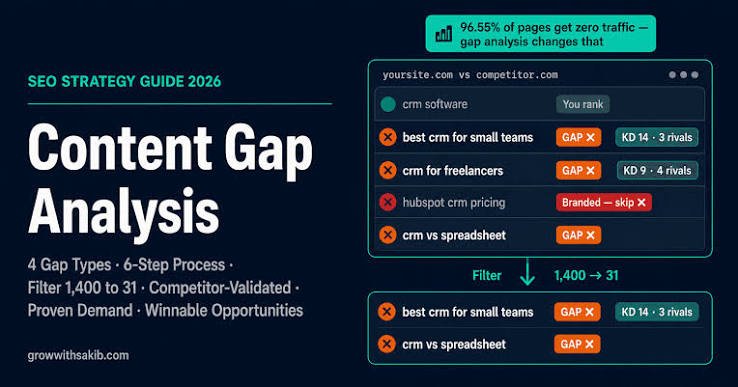
Creating content without a plan often leads to missed opportunities. Content Gap Analysis is a proven method for identifying topics, keywords, and user questions that your website has not yet covered. Instead of guessing what to publish next, you can use real data to create content that meets your audience’s needs and strengthens your overall SEO strategy.
Whether you manage a business website, blog, or eCommerce store, understanding your content gaps can help you improve search visibility, increase organic traffic, and build topical authority.
What Is Content Gap Analysis?
Content Gap Analysis is the process of comparing your existing content with what your target audience is searching for. It helps you discover valuable topics that competitors cover but your website does not.
Rather than publishing random articles, this approach allows you to focus on content that has the highest potential to attract visitors and answer important user questions.
Why It Matters
A well-planned Content Gap Analysis helps you:
- Discover untapped keyword opportunities
- Improve search engine visibility
- Create content that answers user intent
- Strengthen topical authority
- Increase qualified organic traffic
- Improve conversions through better content coverage
Instead of producing more content, you produce smarter content.
Benefits of Content Gap Analysis for SEO
Performing Content Gap Analysis offers several long-term advantages for your website.
Better Keyword Coverage
Many websites rank poorly because they overlook valuable search queries. Identifying these missing opportunities allows you to create content that targets a wider range of relevant keywords naturally.
Higher Search Rankings
Search engines prefer websites that provide comprehensive information. Filling content gaps helps search engines understand your expertise and improves your chances of ranking for competitive searches.
Improved User Experience
Visitors appreciate websites that answer all of their questions in one place. When users find complete information, they stay longer, engage more, and are more likely to return.
How to Perform a Content Gap Analysis
A successful Content Gap Analysis follows a structured process.
1. Audit Your Existing Content
Start by reviewing your current pages and blog posts. Identify topics that perform well and those that receive little traffic.
Ask yourself:
- Which topics are outdated?
- Which pages need expansion?
- Are important customer questions missing?
2. Research Competitor Content
Study competitors that rank higher for your target topics. Compare their content with yours and identify areas where they provide additional value.
This doesn’t mean copying competitors. Instead, look for opportunities to create better, more helpful resources.
3. Identify Missing Keywords
This is where Keyword Opportunity Research becomes valuable. Look for relevant search terms that your competitors rank for but your website does not.
Prioritize keywords that:
- Match user intent
- Have reasonable search demand
- Fit your business goals
- Can be answered with high-quality content
4. Understand Search Intent
Successful Search Intent Optimization means understanding why someone searches for a keyword.
Common search intents include:
- Informational
- Commercial
- Transactional
- Navigational
Your content should match the user’s goal instead of simply repeating keywords.
5. Create a Content Plan
Once you’ve identified missing opportunities, organize them into a publishing calendar.
Group related topics together to build topical authority and make your website easier for both users and search engines to understand.
Best Tools for Content Gap Analysis
Several SEO tools simplify Content Gap Analysis and provide useful insights.
Popular options include:
- Google Search Console
- Google Analytics
- Ahrefs
- Semrush
- Moz
- Screaming Frog
- Ubersuggest
These platforms help identify missing keywords, underperforming pages, competitor rankings, and technical issues.
Common Content Gaps to Look For
Not every gap is about missing keywords. Consider these areas as well.
Missing Educational Content
Many businesses publish product pages but overlook helpful guides and tutorials.
Outdated Articles
Refreshing older content often delivers faster SEO improvements than creating brand-new pages.
Weak Internal Linking
Strong Content Strategy Planning includes connecting related pages with meaningful internal links to improve navigation and distribute authority.
Incomplete Topic Coverage
Instead of writing one short article, build a cluster of related content that thoroughly covers a subject.
Best Practices for Successful Content Gap Analysis
To get the best results, follow these recommendations:
- Focus on quality before quantity.
- Publish content that solves real problems.
- Update older articles regularly.
- Monitor performance with analytics.
- Improve internal linking.
- Prioritize user experience.
- Create comprehensive topic clusters.
- Measure results and refine your strategy.
Remember that SEO is an ongoing process. A regular Content Gap Analysis helps keep your website relevant as search trends evolve.
Common Mistakes to Avoid
Many websites fail to see results because they make avoidable mistakes.
Avoid:
- Targeting keywords without understanding search intent
- Publishing duplicate or thin content
- Ignoring competitor insights
- Failing to update existing pages
- Writing only for search engines instead of readers
- Neglecting content organization
Creating useful, trustworthy content should always be the priority.
Conclusion
A well-executed Content Gap Analysis helps you uncover valuable opportunities that competitors may already be using successfully. By identifying missing topics, improving existing pages, and creating content that genuinely answers user questions, you can strengthen your website’s authority and improve long-term organic visibility.
SEO success isn’t about publishing the most content—it’s about publishing the right content. When combined with effective Keyword Opportunity Research, thoughtful Content Strategy Planning, and strong Search Intent Optimization, your content becomes more useful for readers and more competitive in search results.